If you teach kindergarten or first grade English learners, you know how tricky CVC words in the ESL classroom can be. In these consonant, vowel, consonant (CVC) words, understanding that letters represent sounds, and that sounds together can make words, takes time and plenty of practice. The good news? Combining hands-on activities with visuals helps your students make sense of English sounds and start building knowledge and confidence.
In this post, I’m sharing some of my favorite ways to practice CVC words in the ESL classroom using three key tools: magnetic foam objects, real photo visuals, and engaging phonics games. Be sure to teach the sounds explicitly and use these activities to reinforce the learning. They are great for small group practice.
Step 1: Build Phonemic Awareness
Phonemic awareness, the ability to hear and manipulate sounds in words, is the foundation. Many English learners need extra support in this area because they’re learning new sounds that might not exist in their home language. The short vowel sounds can be especially tricky.
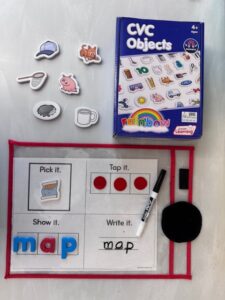
That’s where CVC magnetic foam objects come in. These little 3D pieces (like a mini “map,” “sun,” or “bed”) make learning to blend and segment sounds hands-on and fun. I love to use them for small-group lessons. I add in counters and real photo visuals too.
Here are a few ways to use them:
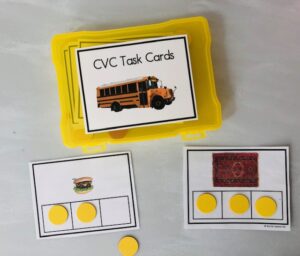
Segment and Blend: Students slide each counter as they say the sounds: /b//u//n/, /r//u//g/, and /m//a//p/, then slide their finger under to say the whole word (bun, rug, and map)
Sort by Vowel Sound: Make five mats labeled a, e, i, o, u and have students place the objects under the correct vowel sound.
Beginning Sound Match: Give students letter magnets and have them match each object to its first letter. (You can do this for middle and ending sounds too!)
Teacher Tip: Let your students hold the objects while saying the word out loud. This connects sound, touch, and meaning. It’s a powerful combination for language learners!
You can find the magnetic foam set I use on Amazon here. They are durable, colorful, and perfect for small groups. (affiliate link)
Step 2: Connect Sounds to Meaning with Manipulatives of CVC words in the ESL Classroom
More ways you can use the manipulatives:
Word building – at first just one word at a time connecting visuals, the sounds, and the letters
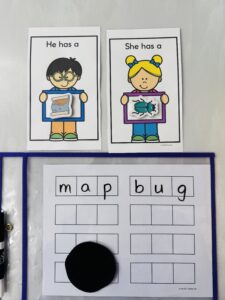
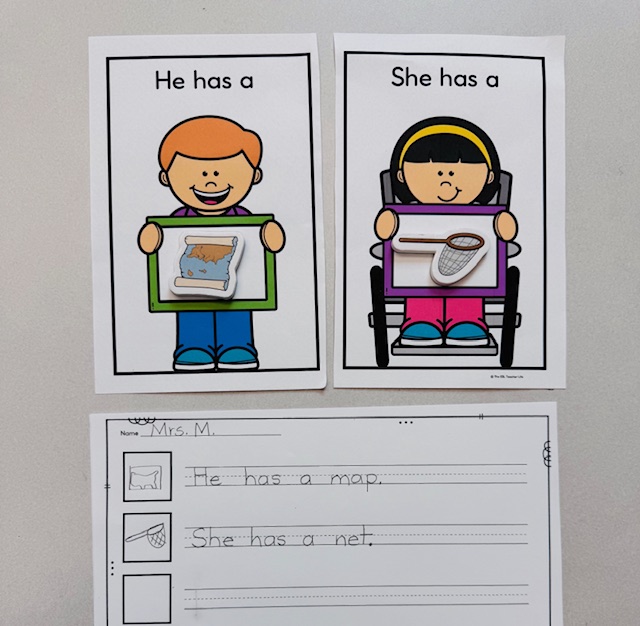
More words – then building several words and using complete sentences to talk about them
Sentence writing! – using the CVC words in complete sentences in writing too
Step 3: Extend Learning with Phonics Games, Reading and Writing Activities
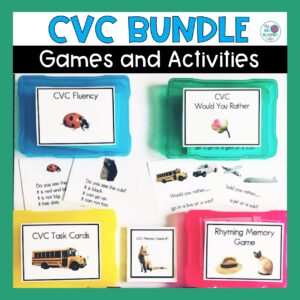
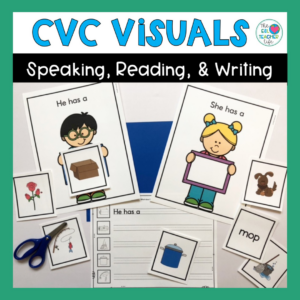
Once your students have practiced sounds and vocabulary, it’s time to solidify learning and expand their application through games, reading, and writing. My ESL Games and Activities Phonics CVC Words BUNDLEincludes a variety of activities shown above.
Here are a few favorites:
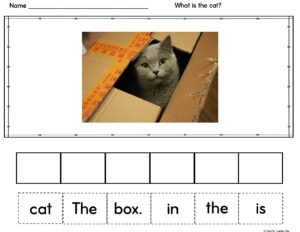
Cut and Paste sentences: for building beginning sentences
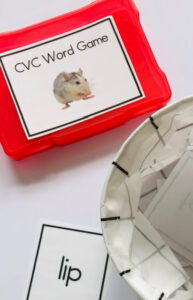
Fluency Word Game : Rats!
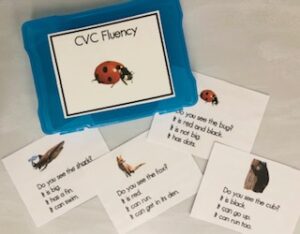
Short CVC Passages with real photos
These activities make practice fun while giving students repeated exposure to high-frequency words, phonics patterns and vocabulary.
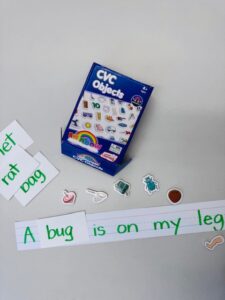
You can also add reading at the sentence level by swapping out words to build confidence. In a simple example, change a word in the sentence and have students read it and then find the object. Then students can change out what CVC word in on the leg. In this example, students read and find the bug and put it on the leg. Change the word. Have students read it. “The ___ is on the leg.” and show it.
Build up to changing out more than one word. Example: The top is in the bag. Then, extend to longer sentences with more high frequency words as students become comfortable reading.
Ready to Get Started with CVC words in the ESL Classroom?
Here are some tools I recommend to make working on CVC words in the ESL classroom successful:
We use cookies to ensure that we give you the best experience on our website. If you continue to use this site we will assume that you are happy with it.