Vocabulary Games to Boost English Skills for Multilingual Learners
How Can We Use Vocabulary Games?
Add a “Fun Friday” game to your week! It may sound like a good time but, the secret is, it’s also full of learning. Vocabulary games aren’t just a way to relax and celebrate the end of the week; for multilingual learners, games are a powerful tool for practicing speaking, listening, and vocabulary in a low‑stress, high‑engagement way. Here are some of my go‑to vocabulary games that you can add to any day of the week, or save for Fridays!
Matching Games
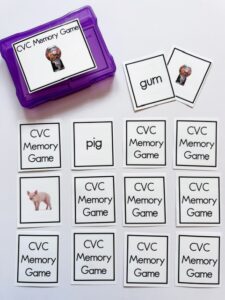
First up, matching games. Students take turns flipping over cards to find matching pairs — either identical pictures, or picture‑word combinations.
Why it works:
Reinforces word‑picture connections, word-definition understanding, letter sounds, and rhyming words just to name a few
Boosts memory and concentration
Works beautifully for reviewing new vocabulary or phonics skills
Go Fish!
Players ask each other for cards by name: “Do you have a ___?” to collect matches.
Why it works:
Promotes question formation and polite requests
Gives lots of speaking and listening practice in a repetitive, comfortable structure
Encourages students to listen to peers carefully
Roll and Speak
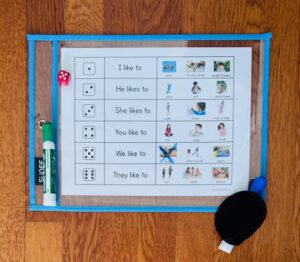
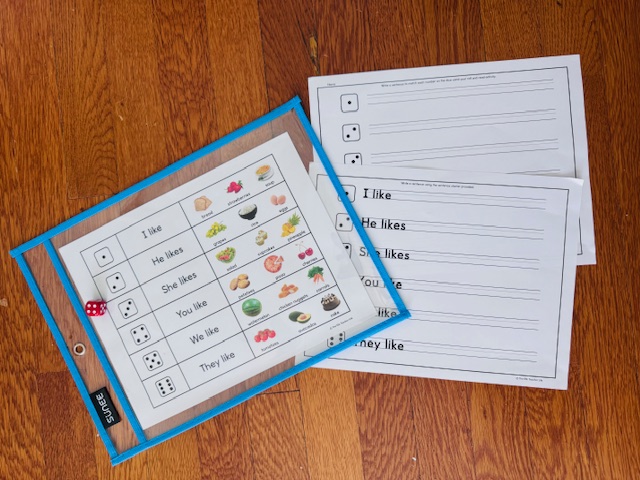
Students roll a die and complete a speaking prompt that matches the number they rolled.
Why it works:
Adds randomness and surprise to speaking practice
Builds confidence speaking in complete sentences with correct grammar
Easy to adapt to any theme or vocabulary sets
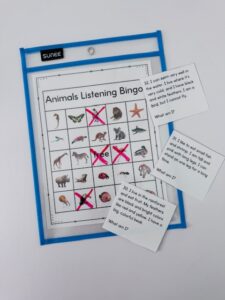
Listening Bingo!
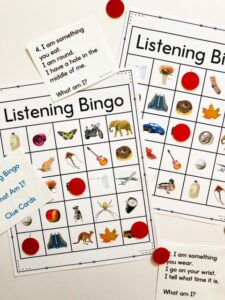
Call out words, descriptions, or clues, and students listen carefully to find the match on their bingo card.
Why it works:
Strengthens listening comprehension
Builds quick word recognition skills
Perfect for vocabulary review in any unit
“What Am I?” cards are great for listening test prep
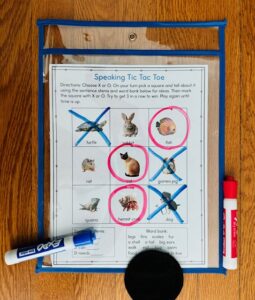
Speaking Tic Tac Toe
To earn their “X” or “O,” students must speak in complete sentences to tell about a picture.
Why it works:
Encourages complete sentences and structured speaking
Repeats target vocabulary in a playful way
Gives all students a chance to participate without feeling “on the spot”
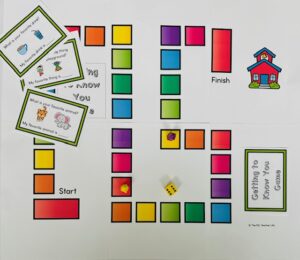
Getting to Know You Board Game
Players move along the board and answer personal or fun questions as they land on each square.
Why it works:
Encourages personal connections and sharing
Gives authentic speaking practice in a safe, supportive space
Helps build classroom community
These are just a few examples. When someone comments that your students look like they are having so much fun, you can share that vocabulary games give students:
A low‑pressure environment to take language risks
Repetition that makes new vocabulary stick
Opportunities to listen, speak, and interact in meaningful ways
A chance to connect socially with classmates
Huge wins, right?
Try Vocabulary Games in Your Classroom
If you’re looking for ready‑to‑use games that support speaking, listening, and vocabulary review, my bundles are designed with real photos and sentence frames to help your multilingual learners succeed from day one. (And many of them have extensions to include writing!)
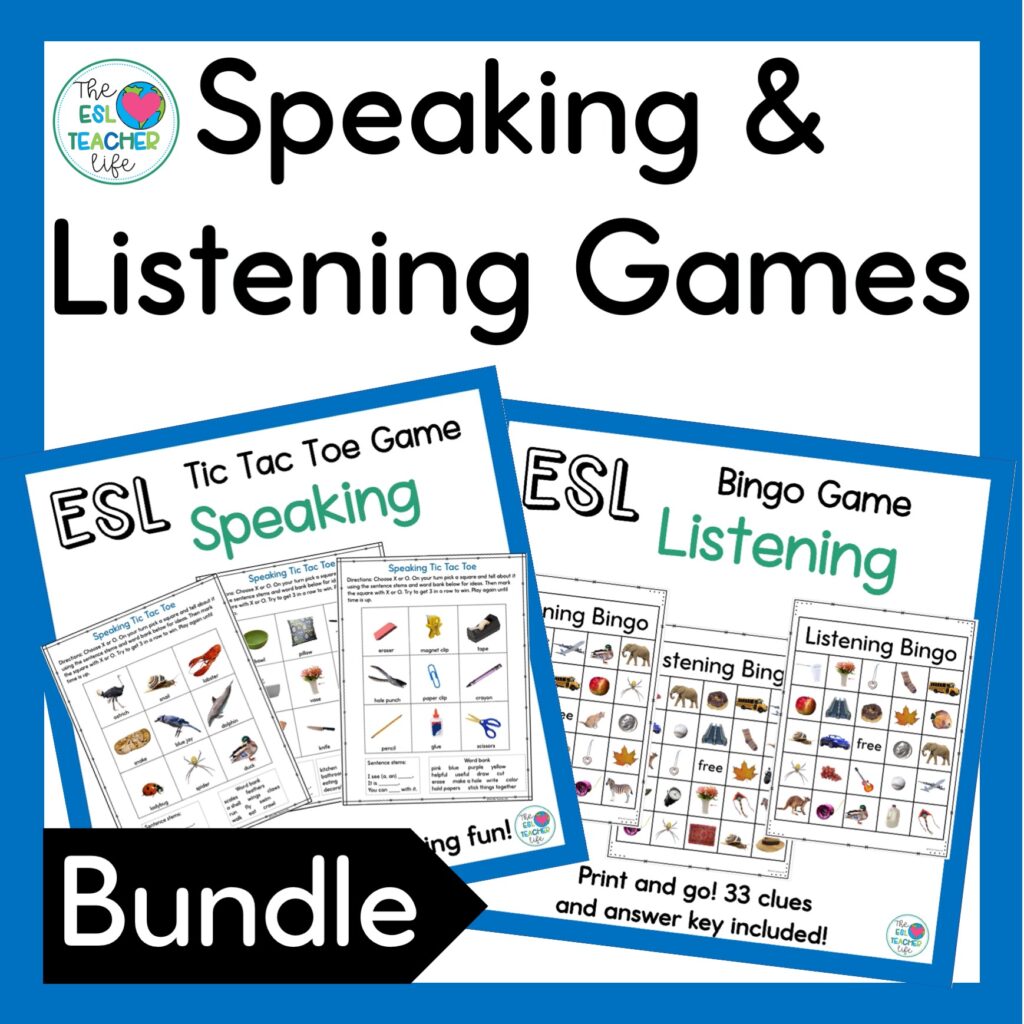
My Speaking and Listening Games Bundle has 2 listening bingo games, go fish, and speaking tic tac toe.
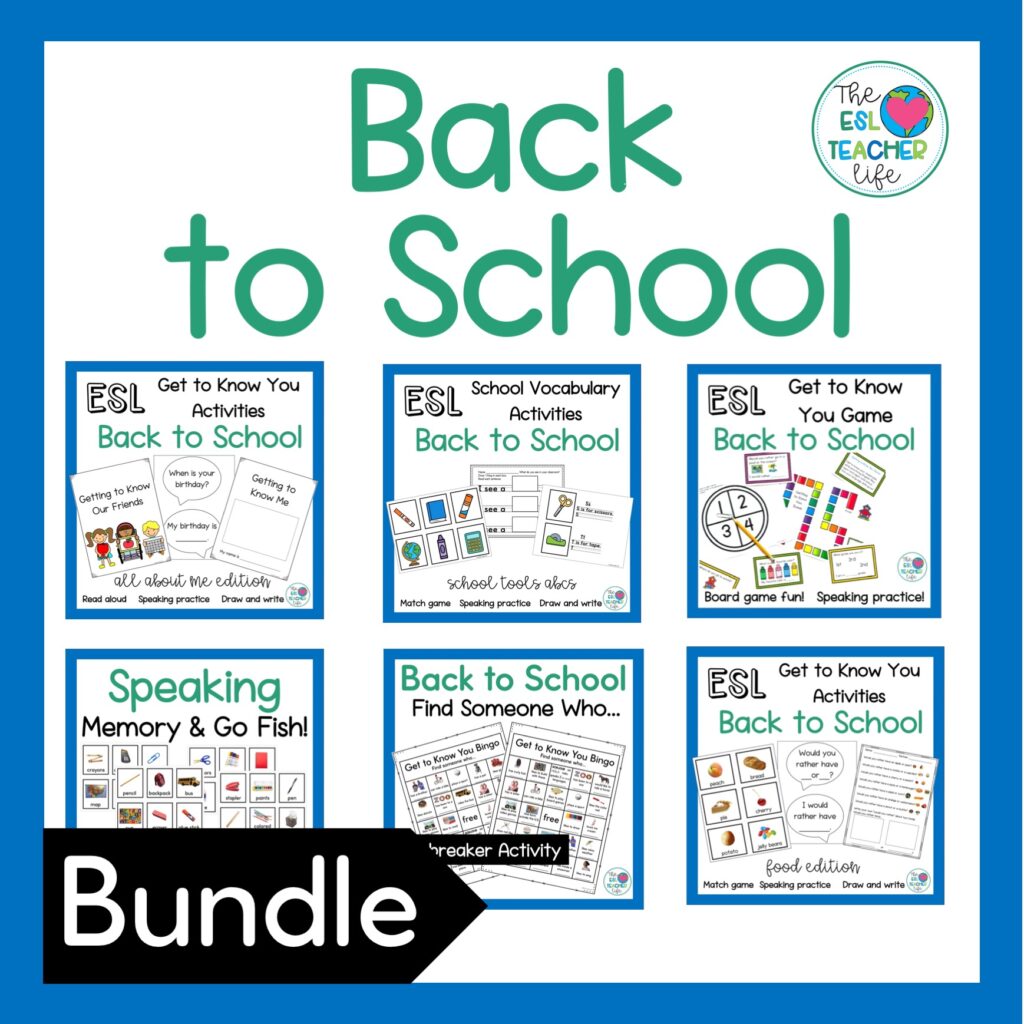
The Back to School Super Bundle has “getting to know you” games and school related vocabulary games, as well as other back to school activities.
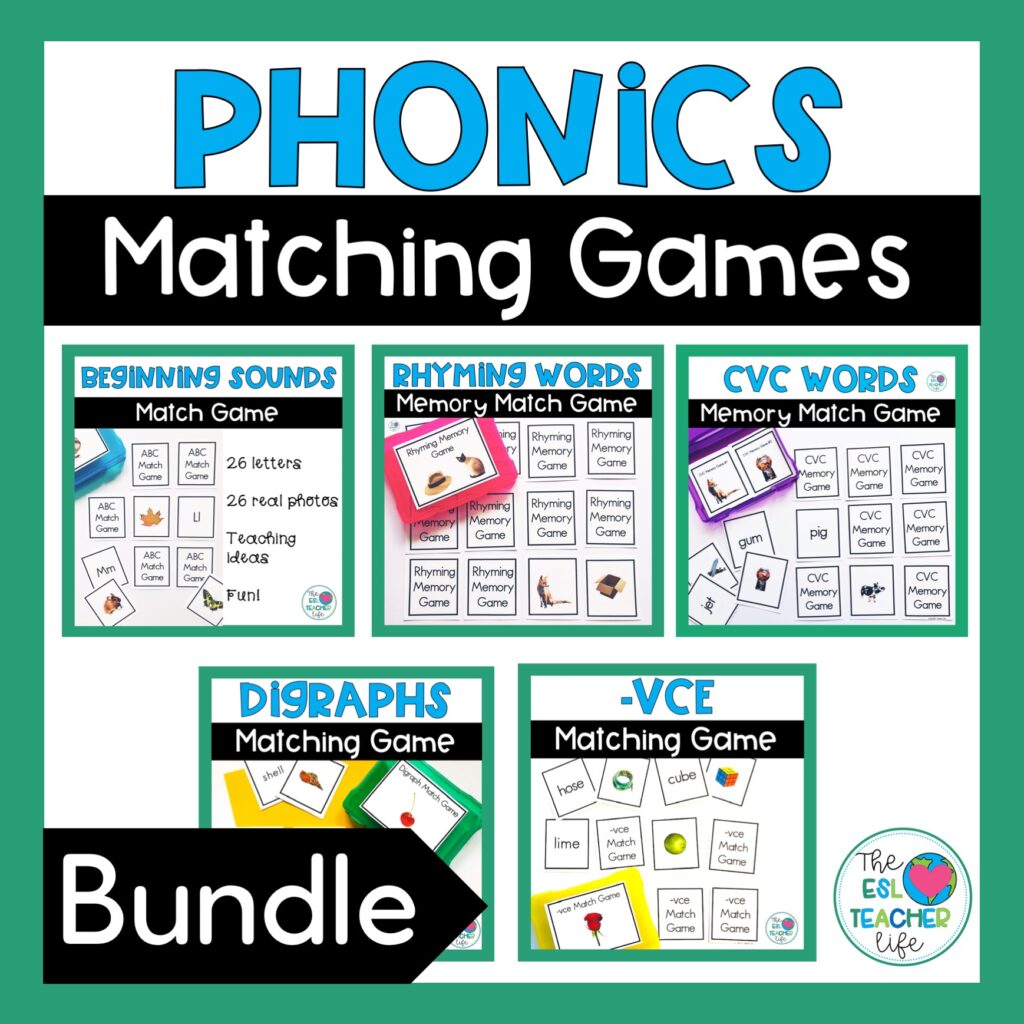
The Phonics Matching Games Bundle has visuals to support phonics so MLs learn new words as they learn to read them.
If you’d rather check out each activity individually, just click on the photo above that interests you.
Your Fridays – or any day of the week – just got more fun!
We use cookies to ensure that we give you the best experience on our website. If you continue to use this site we will assume that you are happy with it.