The first week of school with multilingual learners isn’t really about academics – it’s about belonging. Before students can take language risks, ask questions, or attempt new vocabulary, they need to feel safe. And feeling safe starts with feeling known. That’s exactly what these ESL getting to know you activities are designed to do. Over the course of several days, students share about themselves, learn about their classmates, and practice all four language domains — reading, writing, listening, and speaking – in a low-stakes, high-connection environment.
Whether you’re meeting students for the first time or welcoming a new arrival mid-year, these activities give you a warm, structured framework to build from. Here’s how I use them in my own ESL classroom.
ESL Getting to Know You Activities - Start Here!
ESL getting to know you activities are so important at the beginning of the school year! These activities are great for introducing routines, building confidence, finding out about background knowledge, and of course, getting to know your students!
But there is so much to do!
That’s okay! You can do as little or as much as you have time for, and while you are getting to know your students, you are actually beginning to cover all four language domains (reading, writing, listening, and speaking) as well as the content standards in the primary grades. The resources as shown are best for first and second grade, but you can also adapt them to use with other grades without too much difficulty. For example, with Kindergarten you can assist with writing. Students can dictate what their pictures are about and you can begin to model writing conventions. A quick note about adapting for older students is below!
Getting to Know Your Primary Students
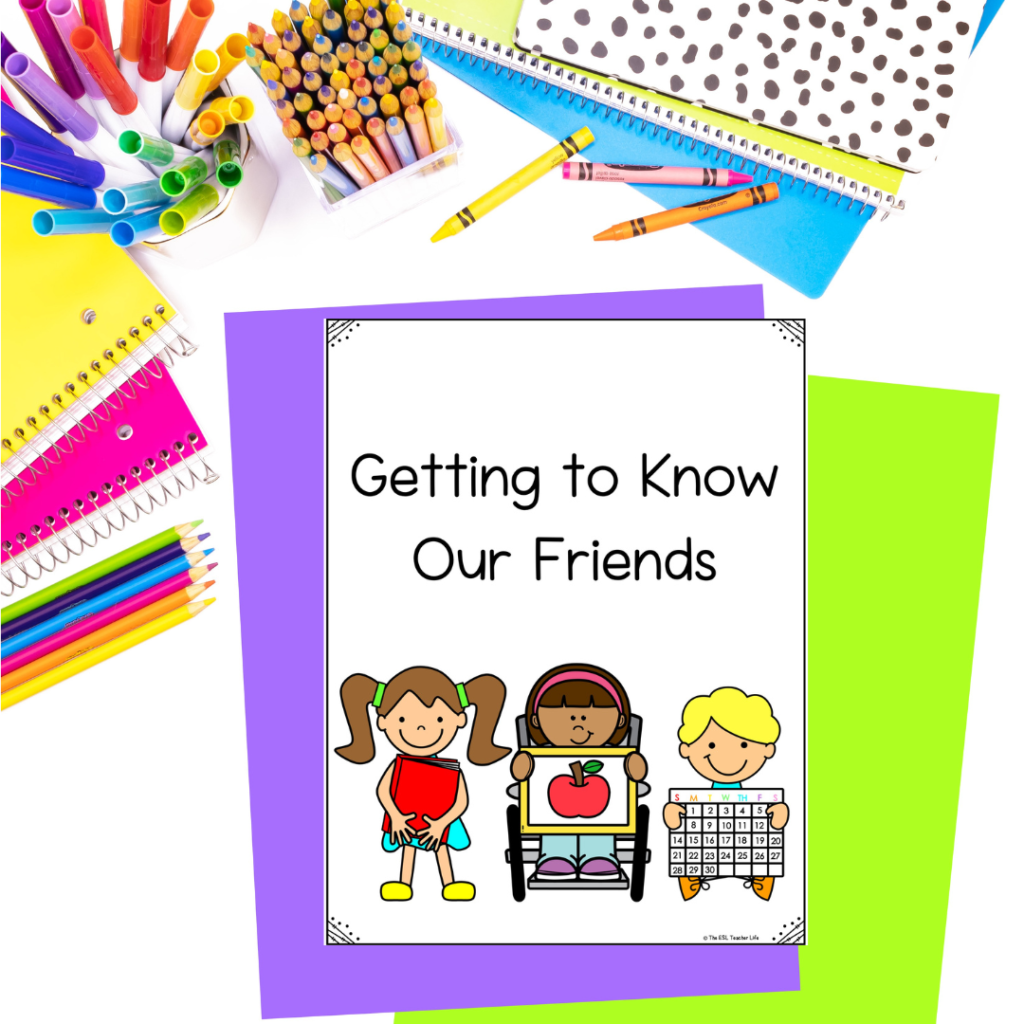
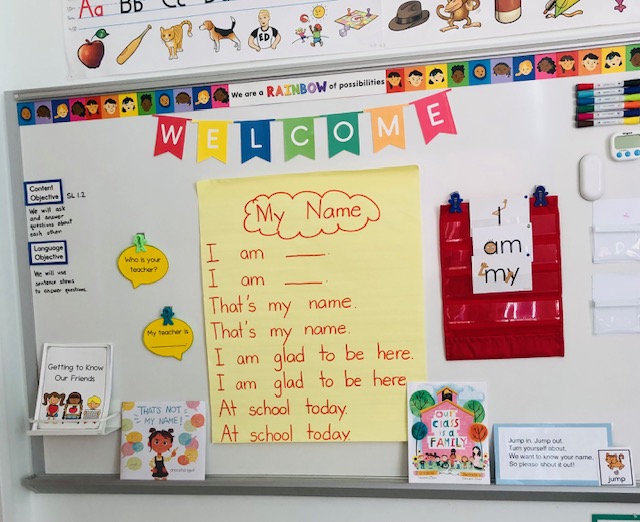
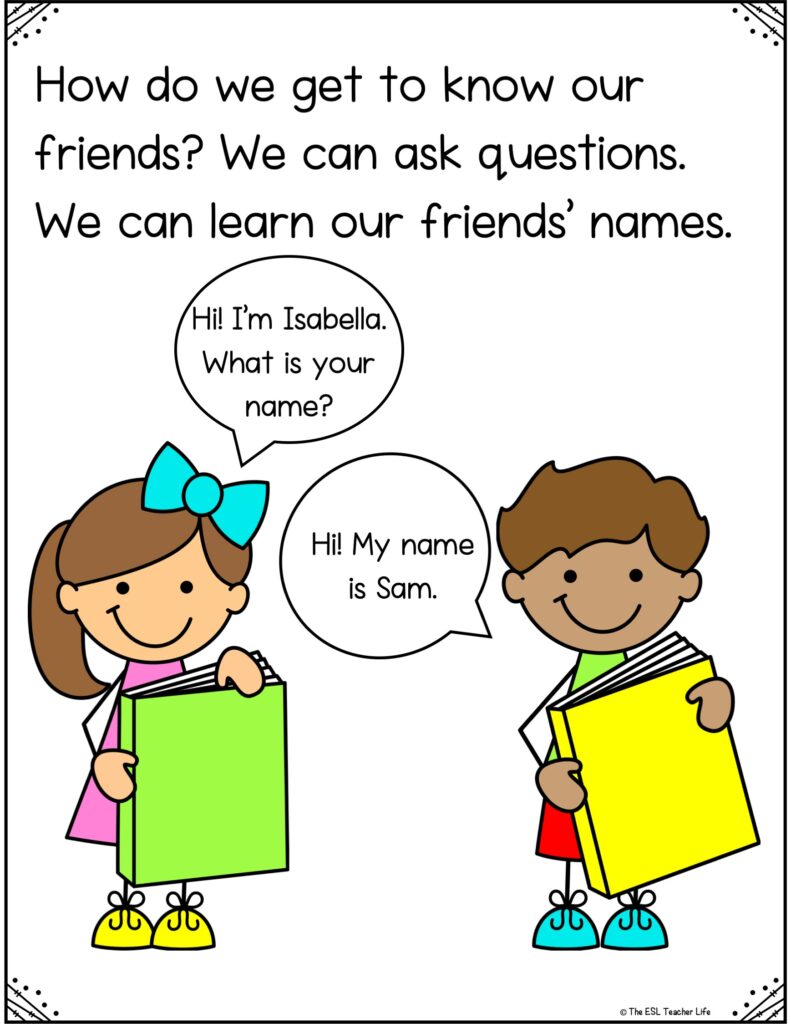
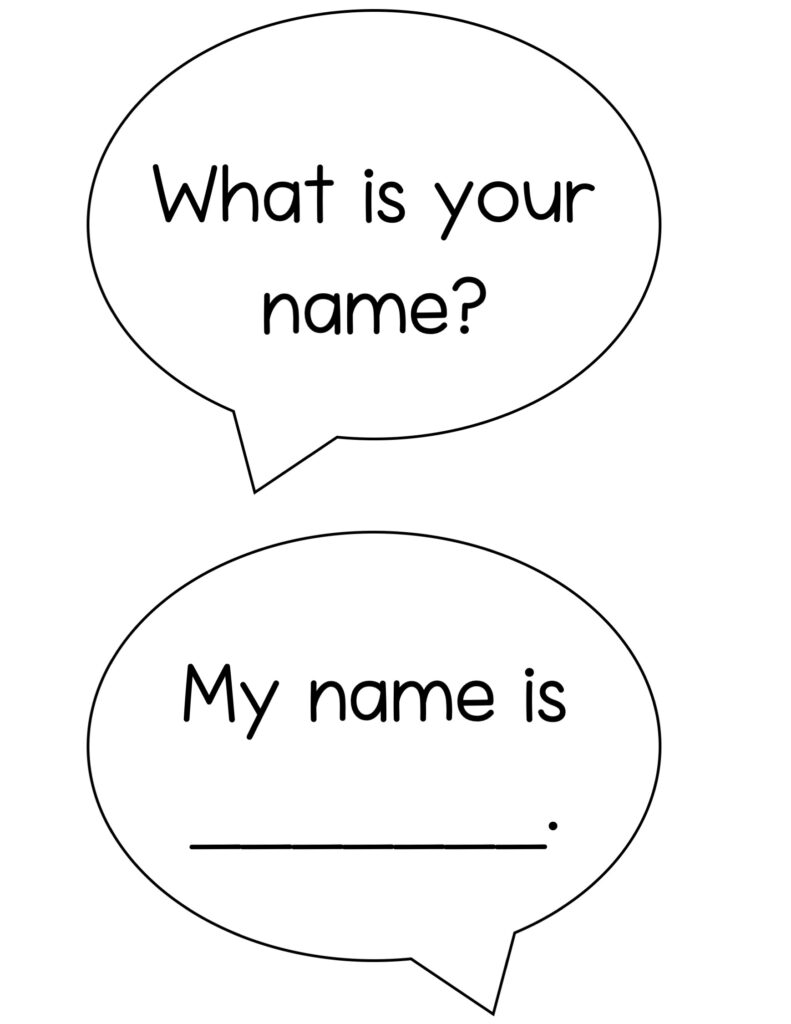
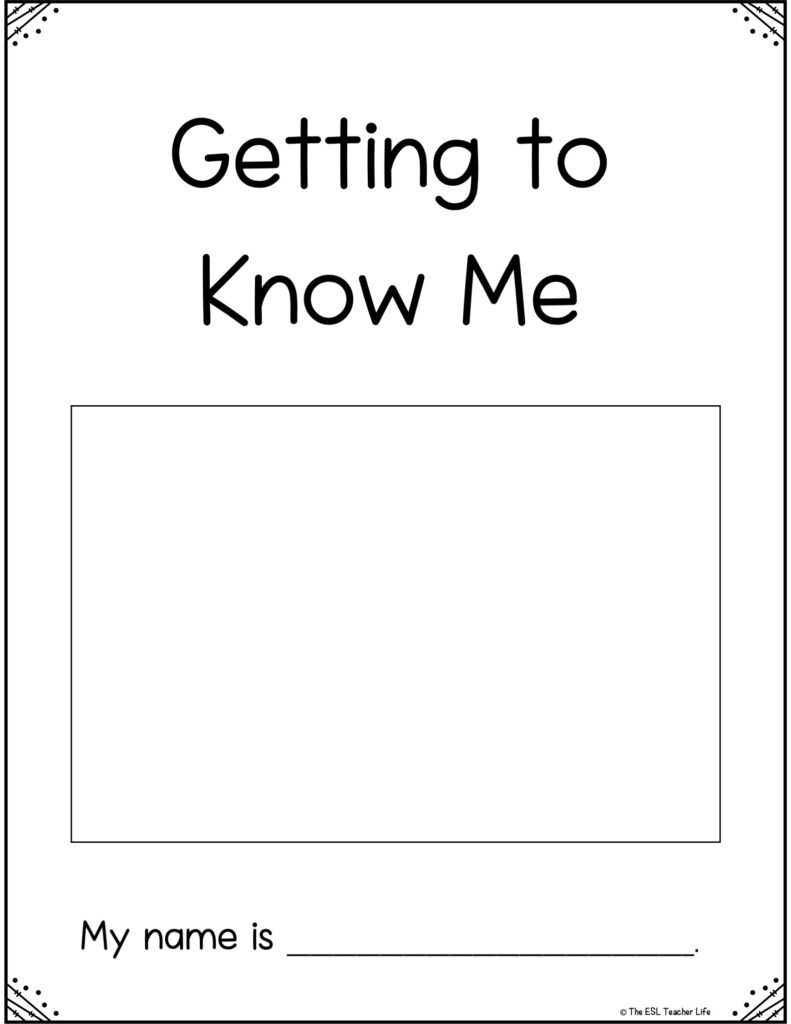
To use as shown, I use open class with a “Jump!” name chant and the “My Name” song shown in the picture. We sing it to the tune of Frère Jacques. This builds confidence and helps students get to know each others’ names. Plus it starts the class with movement and engagement. Then I read the book I made, “Getting to Know Our Friends” (cover shown at the top and in the book holder in the photo). On the first day, we focus on routines such as entering and exiting the small group room, getting supplies, taking turns to speak, etc.) so we do not do any writing activities unless there is extra time.) In future lessons, we revisit the page we are working on and we practice the speech bubbles with question and answer frames.
ESL Lesson Planning Format
Here is one way you could use these ESL Getting to Know You activities over the next several days:
Day 2
Warm-up: Jump! Name Chant and “My Name” Song
Review: Expectations for listening and speaking
Read aloud:That’s Not My Name! by Anoosha Syed – a perfect conversation starter about names, identity, and being seen.
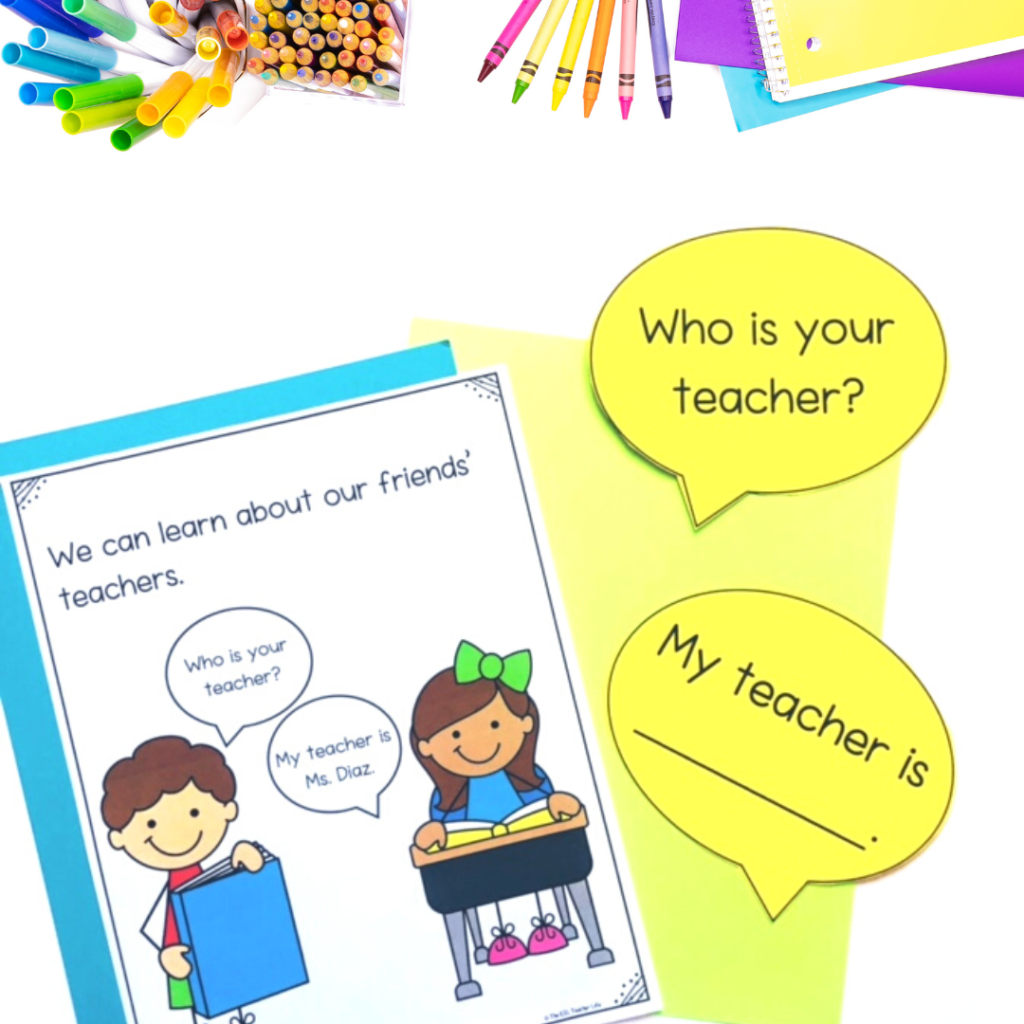
Language practice: Use the speech bubbles to practice asking and answering questions together.
Writing: Model using your own printable copy with a simple think-aloud as you write and draw. Keep it brief -students are still watching and absorbing at this stage.
Continuing the ESL Getting to Know You Activities
Warm-up: Review name chant and song
Read aloud:Our Class is a Family or Our School is a Family by Shannon Olsen
Language practice: Use speech bubbles to talk about grade levels and the many teachers students work with – music, PE, art. If you can, have photos of those teachers on hand for newcomers who may not know their names yet.
Writing: Model how to draw and write to complete the matching printable. If time allows, encourage students to share their drawing with a classmate.
Future ESL Lessons
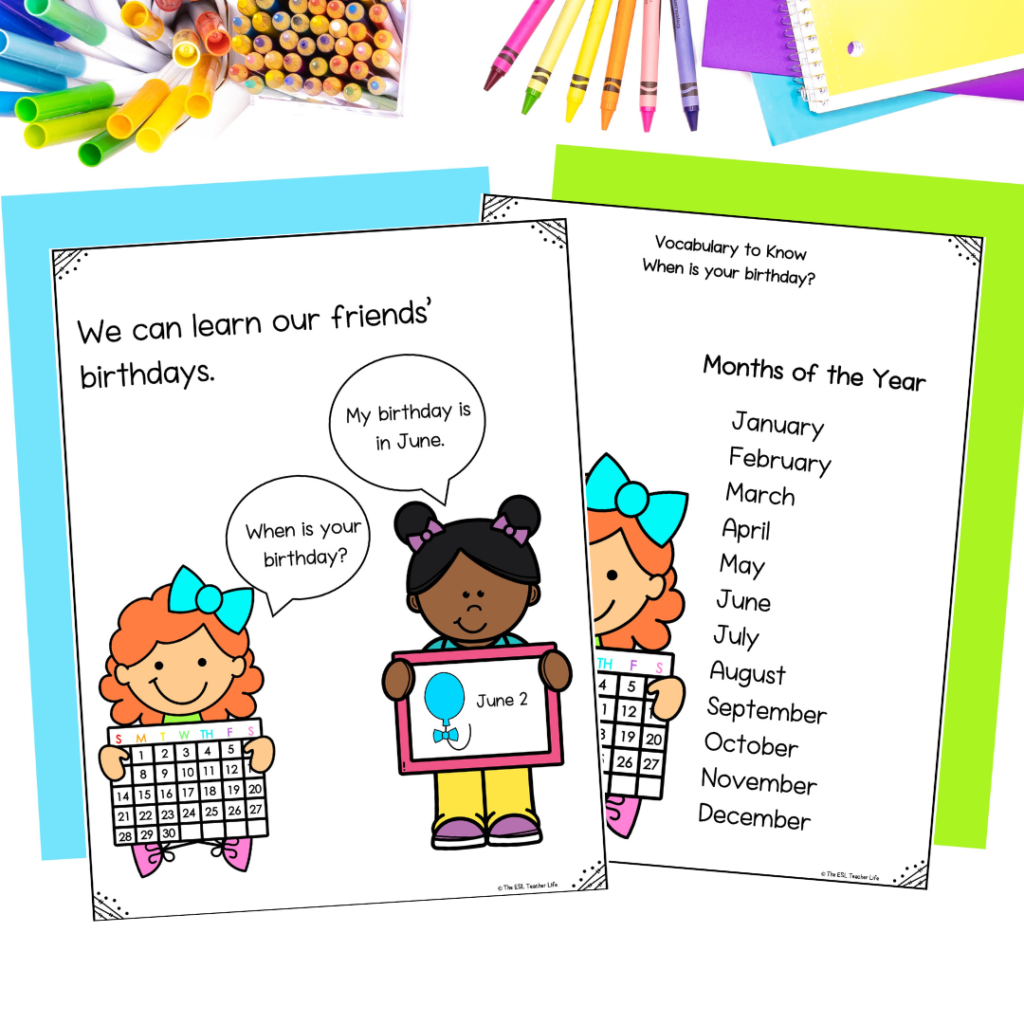
Follow the same general format over the next few days to build routines. Change the chants and the books to match the writing activity for that day. Pick the pages that you think will be most meaningful for your students, or practically, which books are available for you to pair with the writing. (See below for a list.) Don’t forget to practice asking and answering questions using the speech bubbles and revisit previous ones. Encourage other teachers to ask these questions too. Use the “Vocabulary to Know” pages to support students’ answers both in speaking and in writing.
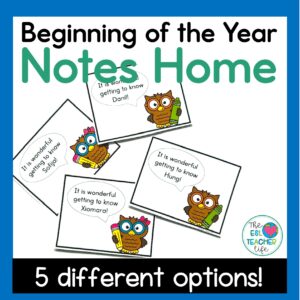
If students are working independently on their “Getting to Know You” writing activities you may have a chance to do some individual students checkins. Give it a try! Staple the completed pages together for each student. These are great to display and wonderful to send home with a note to the family saying, “It is wonderful getting to know _!” And I have a freebie for that! Check it out on TPT. It also comes with other positive notes to send home.
⏱️ Short on time? Here’s how to adapt:
Not everyone has a dedicated ESL block every day. Here’s how to make this work with limited time:
20-minute pull-out sessions: Focus on just the name chant and one speech bubble exchange per day. Skip the writing until you have a longer session.
Push-in model: Coordinate with the classroom teacher to use the speech bubble frames during morning meeting or circle time – you get the language practice without needing a separate session.
New student arriving mid-year: This entire sequence works beautifully as a “welcome unit” whenever someone new joins. It’s not just a back-to-school resource.
Kindergarten: You model the writing, they focus on drawing and talking. They can tell you what to write or you can model naming things in their picture and labeling them.
Companion Book List and Supplemental Materials
That’s Not My Name! by Anoosha Syed.
Our Class Is a Family and Our School Is a Family by Shannon Olsen
Where Are You From? by Yamile Saied Méndez
Isabel and Her Colores Go to School by Alexandra Alessandri
Our Favorite Day of the Year by A.E. Ali
(Find these here- Amazon It’s an affiliate link so I may get a small commission if you make a purchase.)
Other helpful resources:
Reading A-Z Books on readinga-z.com such as:
“It is School Time” for support writing about favorite school subjects or “Games We Play” for writing about favorite sports and games.
Epic- getepic.com (free website for educators)
Playground Games by Pam Holden
School Days by Shelley Rotner and Sheila M. Kelly
Birthday by Julie Murray
I Like to Come to School By Jean Feldman and Holly Karapetkova (Can be sung to the tune: “The Farmer and the Dell”)
Plus a video: Favorite Subject
See below for a couple ideas for older students.
For Grades 3-5
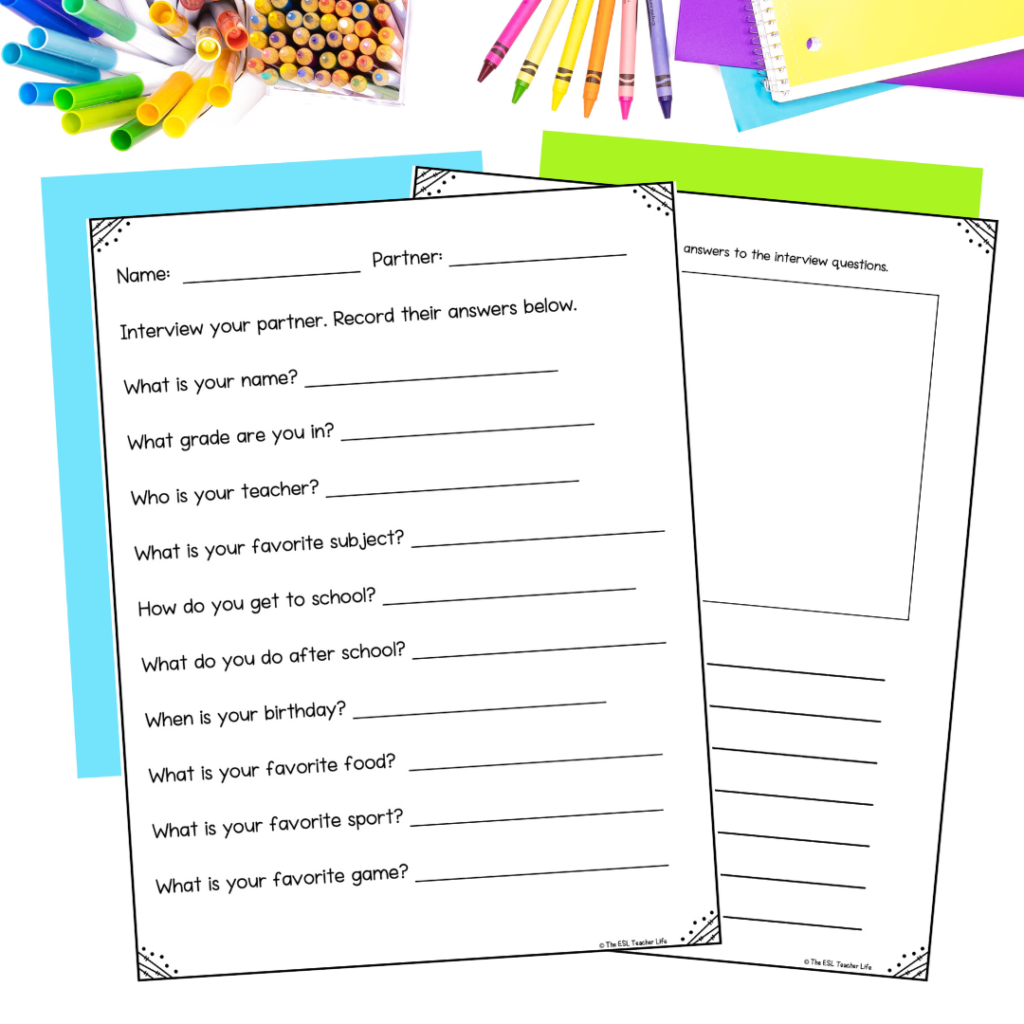
You can use different reading and writing resources with older students. You will want to supplement with other books such as My Name is Sangoel by Karen Williams and blank writing paper or use an alternate final product. Above is an interview sheet for students to interview a partner and write about them that is also found in this resource. Students can also create a poster about themselves or a create a PowerPoint. You can model with a simple one of yourself.
Frequently Asked Questions
How many days does this take? The full sequence works across 5-7 lessons depending on how much time you have each session. You can move faster with more advanced students or slower with newcomers – the format is flexible by design.
Can I use this at other times of year? Absolutely. It works for January restarts, after a long break, and any time a new student joins mid-year. The “getting to know you” concept never really goes out of season.
Do I have to use all the books on the list? Not at all. Use what you have or what your library can get you. The activities work with many different read-alouds. The key is choosing books that connect to the theme of each writing page (names, family, school, favorites).
What if I have a range of proficiency levels in one group? That’s exactly what this resource was designed for. The speech bubble frames support beginners, while the writing extensions give more advanced students room to go deeper. You’ll find natural differentiation happening without much extra effort on your part.
ESL Getting to Know You Resource on TPT
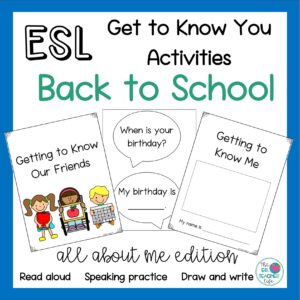
This “ESL Get to Know You Activities” Resource can be found on TPT. Just click the image below.
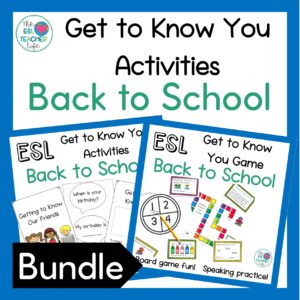
As an extension, check out the Back to School Board Game resource below. Students love to play and it is a great review of many of the questions they practiced in the activities above. Plus it has more questions about their favorites and would you rather style questions. Want them both? Check out the bundle.
Getting to know your students is the most important work you’ll do all year — everything else builds on that foundation. I hope these activities give you a warm, structured way to start building those connections from day one.
If you try any of these activities, I’d love to hear how it goes! Come find me on Instagram or TikTok and share what worked for your students.
We use cookies to ensure that we give you the best experience on our website. If you continue to use this site we will assume that you are happy with it.