A student’s name is one of the most important things about them. For multilingual learners, many of whom are navigating a new language, a new school, and sometimes a new country, having their name learned, said correctly, and celebrated is one of the most powerful things a teacher can do in those first days. It sounds simple. But for a child who has heard their name mispronounced, shortened, or avoided, hearing a teacher make a genuine effort to get it right sends a message that goes far beyond the first week of school: you matter here, exactly as you are. Here are four names activities for the ESL classroom that are interactive, low-prep, and genuinely meaningful – for both you and your students.
Names Activities for the ESL Classroom Activity 1 : Songs and Chants
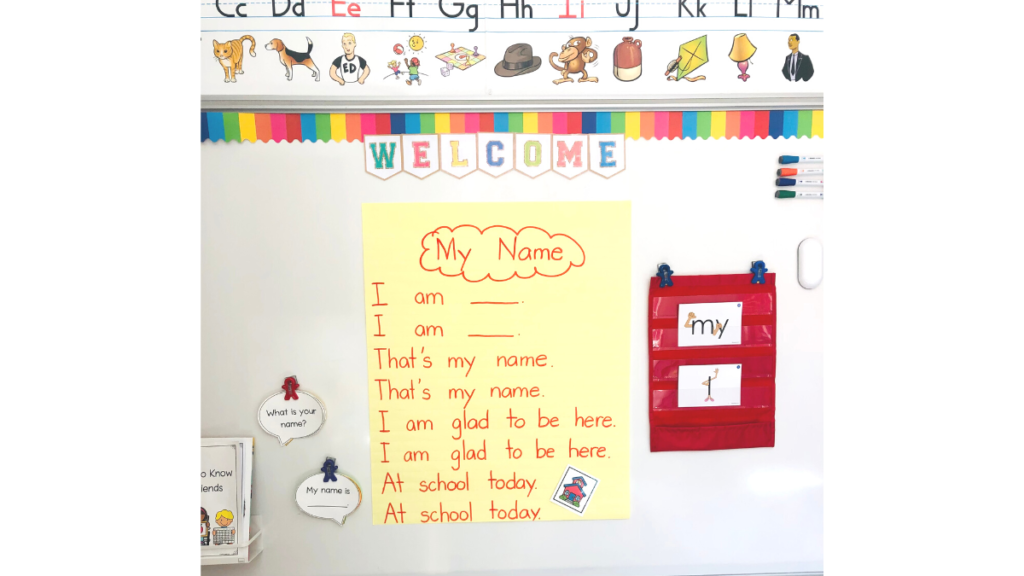
1. One way to learn names in the ESL classroom is through songs and chants including favorites such as: Who Stole the Cookies?, Knock, Knock-Who’s There?, and finishing the sentence frame, “My name is __ and I can do this!” (while modeling a movement).
Also, check out the name poem on the white board photo above. It can be sung to the tune of Frere Jacques. Take turns singing it with each students until they are ready to sing it on their own. Young students love it!
Songs and chants work so well with young multilingual learners for a few reasons: they’re repetitive (which builds memory), they’re low-stakes (no one feels put on the spot when everyone is singing together), and they involve movement and rhythm, which engages different parts of the brain than straight instruction.
A few tips for making name songs work:
- Sing each student’s name the way they say it — not an Anglicized version. If you’re unsure, ask the student or their family before the first day if possible.
- Go slowly at first and build up. By day three, students are usually excited to hear their name come up in the song.
- Let students lead it once they’re comfortable. There’s something magical about a kindergartner proudly conducting the class through their verse.
- This activity works for newcomers arriving mid-year too – it’s a beautiful, low-pressure way to welcome a new student into the group.
Activity 2 : Modeling
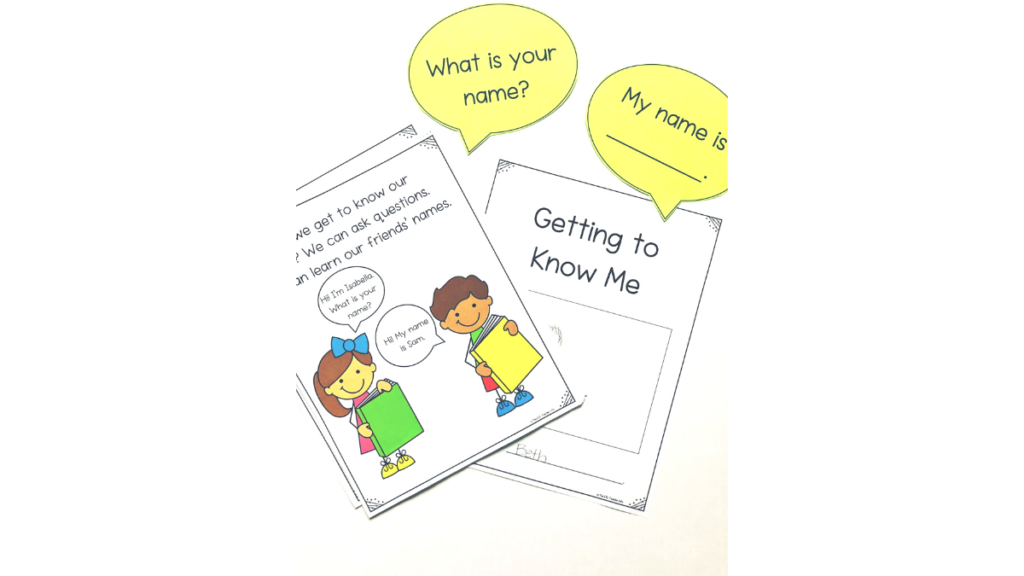
One of the most effective ways to teach students to learn each other’s names is to use them, constantly and intentionally ,in structured activities. Modeling is the key: when you demonstrate what asking and answering looks like, students understand exactly what’s expected.
Here’s a simple modeling sequence for the first week:
- Teacher models with a puppet or stuffed animal: “What is your name?” / “My name is Mr. Bear.” (Students giggle. That’s a good sign.)
- Teacher models with a student volunteer: Repeat the exchange. Narrate what you’re doing: “I’m asking Maria her name. Maria is answering with a complete sentence.”
- Partners practice: Students turn to a neighbor and try it themselves. Walk the room and listen in.
- Share out: A few pairs share with the group. Celebrate every attempt.
The speech bubble frames shown in the resource above are a fantastic visual support during this sequence – students can refer to them independently once they’ve seen the model.
Activity 3: Read Alouds
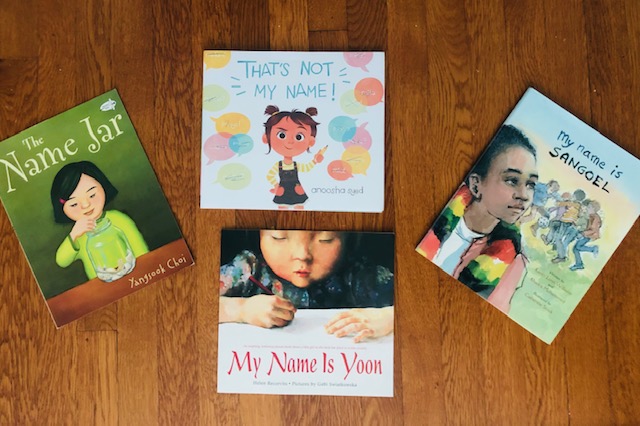
Books about names are some of the richest read-alouds you can share with multilingual learners. They open conversations about identity, culture, and belonging in a way that feels natural and never forced.
Discussion questions to use with any names book:
- “Does your name have a meaning? Do you know what it is?”
- “Is there a story about how you got your name?”
- “Do you have a name in another language or a nickname at home?”
- “How do you feel when someone says your name the right way?”
These questions can be answered through drawing for beginners or in writing for more advanced students. You’ll learn more about your students in one conversation like this than in a week of worksheets.
A few favorite names books pictured including:
- The Name Jar by Yangsook Choi — a Korean girl decides whether to keep her name or choose an American one
- My Name is Sangoel by Karen Williams — a Sudanese refugee finds a creative way to teach his classmates his name
- Alma and How She Got Her Name by Juana Martinez-Neal — a Caldecott Honor book celebrating a long, beautiful name full of family history
(Click the photo above for Amazon links to the books shown — affiliate link)
Activity 4 : Name Art
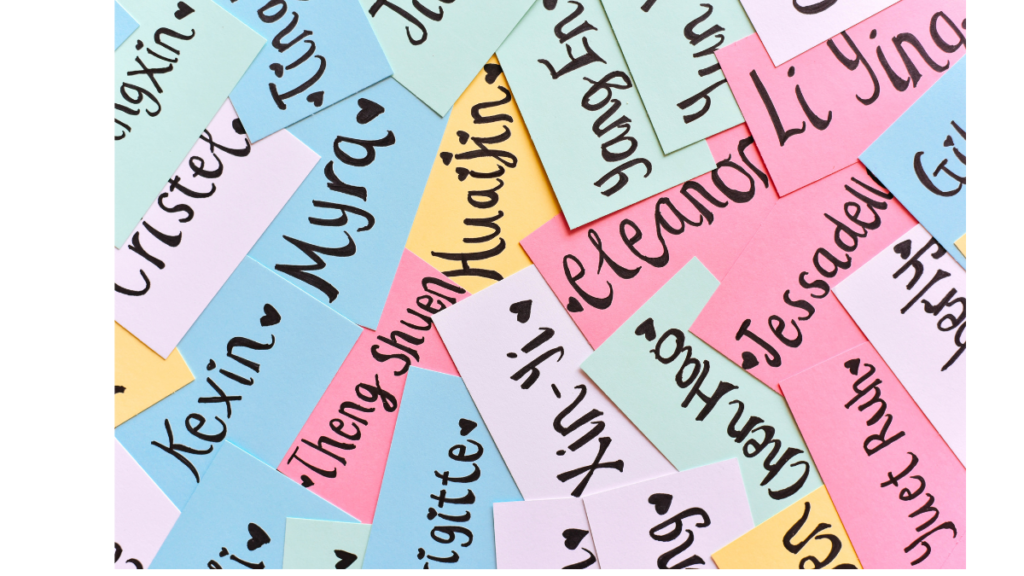
Name art is endlessly versatile and requires almost no prep – just paper, markers, and a few minutes of inspiration. Here are some variations to try depending on your time and your students:
- Name bubble letters: Students write their name in large bubble letters and fill each letter with drawings of things they love. A quick Pinterest search for “name bubble letters” will show you the idea instantly.
- Watercolor name paintings: Write names in white crayon first, then paint over with watercolors. The name “magically” appears. Students are delighted every single time.
- Name acrostic: Each letter of the student’s name becomes the first letter of a word that describes them. Great for grades 3 and up.
- Name in home language: If a student uses a different script at home (Arabic, Chinese, Hindi, etc.), invite them to write their name in both languages side by side. Display these prominently – the whole class benefits from seeing that there are many beautiful ways to write a name.
Whatever format you choose, display the finished name art prominently. Walking into a classroom and seeing your own name on the wall is a small thing that means everything to a child who is still finding their place.
A Note on Pronouncing Students’ Names
No list of names activities for the ESL classroom would be complete without this: learn to say your students’ names correctly, and make it a priority from day one.
If you’re unsure how to pronounce a name, here’s a simple approach:
- Ask the student directly and warmly: “I want to make sure I say your name the right way – can you say it for me?”
- Repeat it back. Ask if you got it right.
- Practice privately if you need to – say it out loud a few times before class.
- Never shorten or change a student’s name without their permission. And if a student tells you they prefer a nickname, honor that too.
Getting a student’s name right is free, takes 30 seconds, and communicates more respect than almost anything else you can do in that first week.
In addition to the names activities in the ESL classroom, check out "Get to Know You" activities

Names are where belonging begins. These four activities — songs, modeling, read-alouds, and name art — give you a simple, joyful framework for honoring every student who walks through your door.
For even more first-week ideas, these posts pair perfectly with this one:
Come share your name art and first-week moments with me on Instagram and TikTok — I love seeing these activities in real classrooms!
Happy teaching,
Beth