Many teachers worry about summer learning loss, but multilingual learners can continue building language skills through simple everyday experiences. The good news? Families don’t need expensive workbooks or complicated lessons. Here are 5 easy ESL summer language activities for you to suggest to families or to use for your own!
1. Read Together
Make reading and conversation a part of summer activities.
Compare words in different languages, tell stories, and share opinions. Take turns reading, and try different kinds of books. Visit the public library or go to a free event at a bookstore.
2. Keep a Summer Picture Journal
Next, students can write about simple things they do over the summer: from creating something, going somewhere, or spending time with family, students can draw and write to record summer memories and keep up their writing skills.
3. Create a Summer Word Collection
Families can collect words they see or hear over the summer that are new to them. They might be related to: insects, food, weather, vacation, and so much more!
Then, students can draw and write words to help them remember new vocabulary.
4. Ask Questions
Do research to find out the answer together. Can you learn 10 new things?
5. Play Games
Also, families can play games. They can discuss the rules and strategies for playing. Students might like matching or card games, board games, or even make up their own games. Outside games count too!
Track ESL Summer Language Activities: complete a summer challenge
Finally, complete ESL summer language activities as a family. If you do a graph of learning activities decide on a family reward when the challenge is complete.
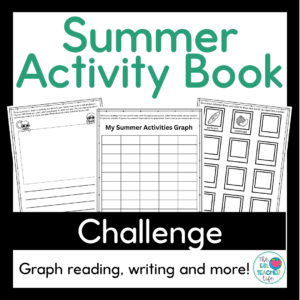
To help out teachers and families, I created this free resource. It has a letter to families, a challenge graph, a word collector page, journal pages, and a game. Check it out!
Beyond ESL Summer Language Activities
Not thinking about ESL summer language activities but instead focused on the upcoming school year? Check out these blog posts:
We use cookies to ensure that we give you the best experience on our website. If you continue to use this site we will assume that you are happy with it.