Getting your classroom ready for the new school year is exciting, but it can also feel overwhelming, especially if you know you’ll be welcoming English learners. Whether you’re a seasoned ESL teacher or a general education teacher with newcomers for the first time, setting up a classroom that supports language development and feels safe and welcoming is one of the most powerful things you can do. Here are just a few simple, high-impact ways to create a newcomer-friendly classroom, with visuals, routines, and tools that build confidence and connection from day one.
A newcomer-friendly classroom isn’t about having the most beautiful room or the most supplies. It’s about making intentional choices in your visuals, your seating, your materials, and your routines that tell every student: you can do this, and I will help you. Here’s what that looks like in practice.
Let's create a newcomer-friendly classroom!
🖼️ 1. Use Visual Supports Everywhere
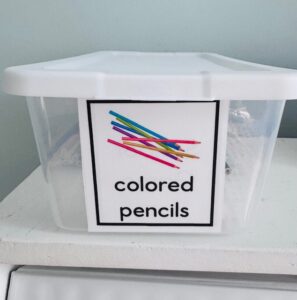
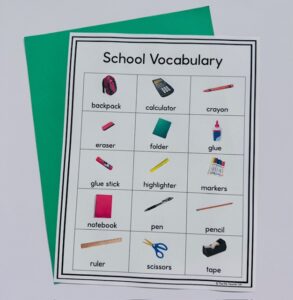
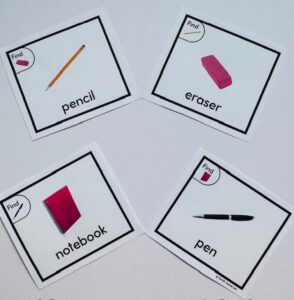
- Newcomers rely heavily on visual cues as they begin to learn English. Include real photos, labeled areas, and visual directions, to help students be more independent, more confident, and less likely to feel overwhelmed.
Start with:
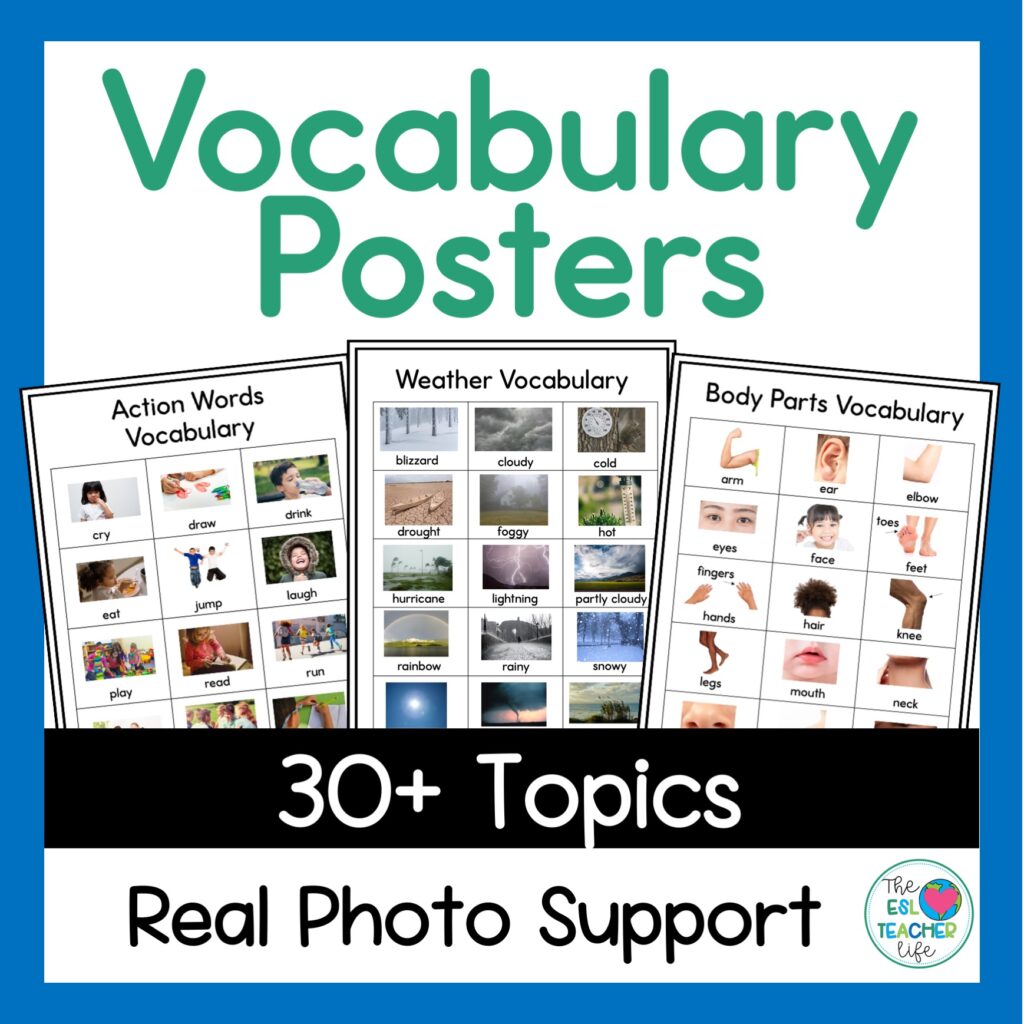
- Real photo vocabulary cards and labels for common objects
Visual schedule cards to support daily routines
Visual supports are the single most impactful thing you can add to a newcomer-friendly classroom because they work across all proficiency levels simultaneously. A student who arrived last week and a student who has been learning English for two years can both benefit from a well-placed visual.
Here’s how to think about visual supports strategically:
- Real photos beat clip art every time for newcomers. A photo of an actual pencil is more immediately understood than an illustrated one. This is especially for students who are still connecting English words to real objects.
- Label everything at student eye level: supply bins, the door, the sink, cubbies, the teacher’s desk. Students who can navigate independently feel more confident.
- Visual directions alongside verbal ones dramatically reduce the anxiety of not understanding. Even a simple sequence of pictures showing “take out your folder → open to page 2 → begin writing” can make a transition seamless for a newcomer who missed the verbal instruction.
- Visual schedules are especially powerful. Knowing what comes next, even before understanding the words, gives newcomers a sense of control in what can feel like a very unpredictable environment.
Don’t feel like you have to do all of this before day one. Start with labeled supply areas and a visual schedule, and build from there as you learn what your students need.
🪑 2. Be Intentional About Seating and Partners
The way you group and seat students can support language learning too. Newcomers benefit from being placed near peer models – classmates who are kind, verbal, and willing to help.
Ideas:
Seat newcomers near visual supports like anchor charts
Create simple partner routines (Partner A/B visuals, buddy charts)
Thoughtful seating is something teachers often don’t think about until a problem arises, but being proactive here pays enormous dividends with newcomers.
What to look for in a good partner or seat neighbor for a newcomer:
- A student who is patient and willing to point, gesture, and model without being asked
- Someone who won’t speak for the newcomer, but will wait and encourage
- Ideally, a student who shares the newcomer’s home language – even partial shared language can be enormously reassuring in those first overwhelming days
Partner routines to establish early:
- A/B partners: Designate Partner A and Partner B for every activity. Newcomers always know their role even before they know the content.
- “Show me” partner routine: Before asking newcomers to speak, teach partners to show first (point to the picture, act it out, write it). First, the newcomer observes, then mirrors.
- Buddy for transitions: For the first week especially, a consistent transition buddy removes the anxiety of not knowing where to go or what to do next.
🗂️ 3. Prep Newcomer-friendly Classroom Materials
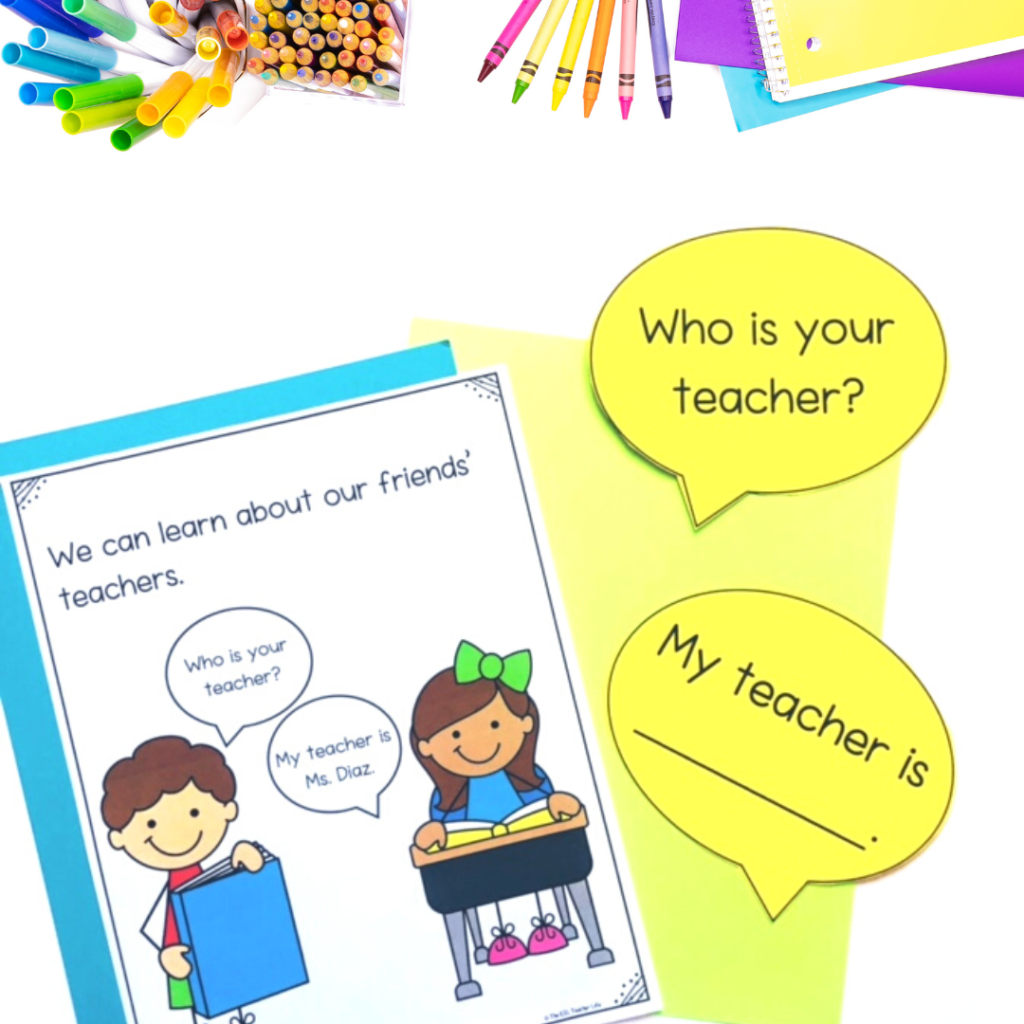
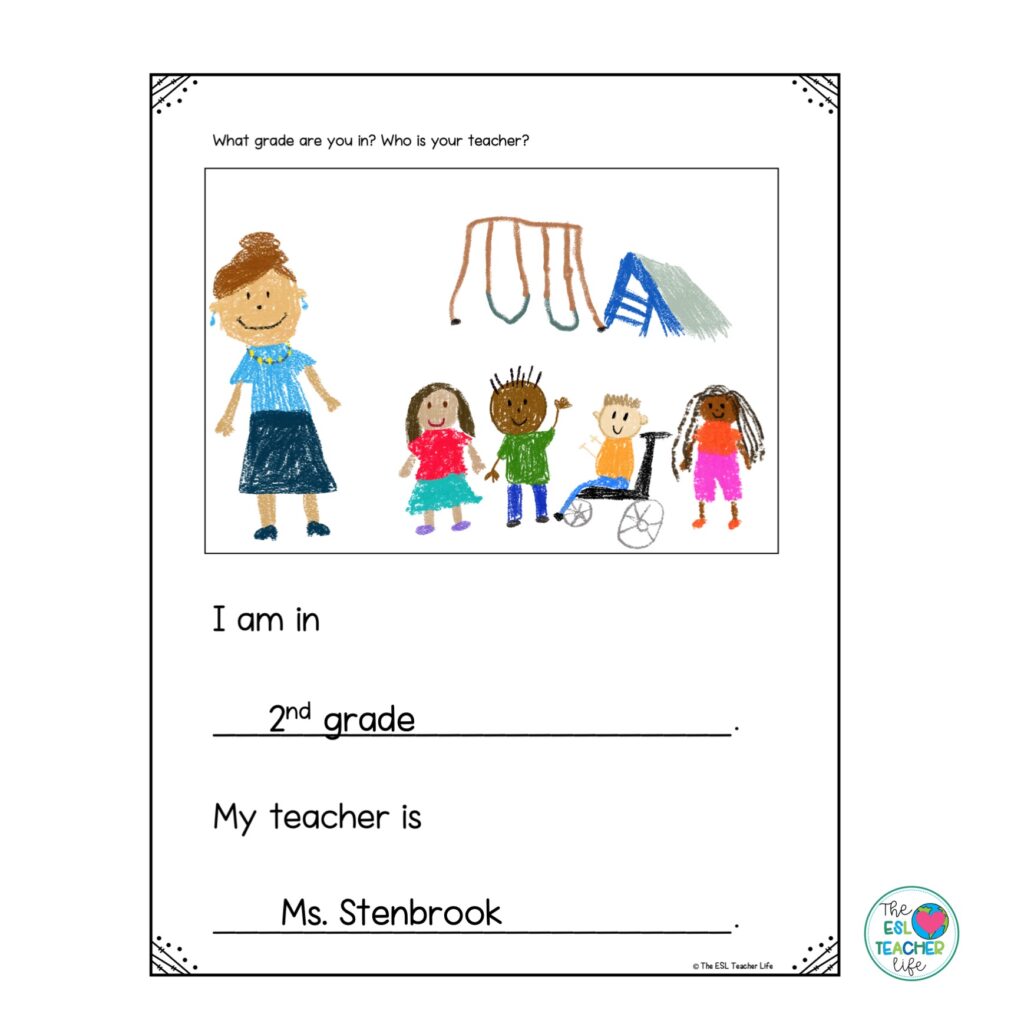
Even on day one, your newcomers can participate when you provide the right scaffolds. Printables like picture-based dictionaries and “All About Me” pages with picture support and sentence starters give students ownership.
Must-haves:
Personal visual dictionaries or “student office”
“All About Me” activities
The right materials on day one aren’t about academics, they’re about agency. When newcomers can point, draw, or circle to communicate before they can speak or write in English, they feel capable rather than lost.
What a “student office” or personal visual dictionary looks like in practice: A student office is typically a file folder or laminated card that lives on a student’s desk and contains visual references they can use independently. Alphabet charts, number lines, color words with pictures, basic sight words with images, and sentence frames for common classroom needs like “I need help” or “May I use the restroom?” are helpful.
For “All About Me” activities specifically: Choose versions that have picture support and sentence starters built in so students aren’t staring at a blank page. Drawing is always a valid response. A student who draws their family, their home country’s flag, and their favorite food has communicated a tremendous amount without writing a single word in English. Display these prominently once complete.
🫶 4. Create a Welcoming Environment for All Languages
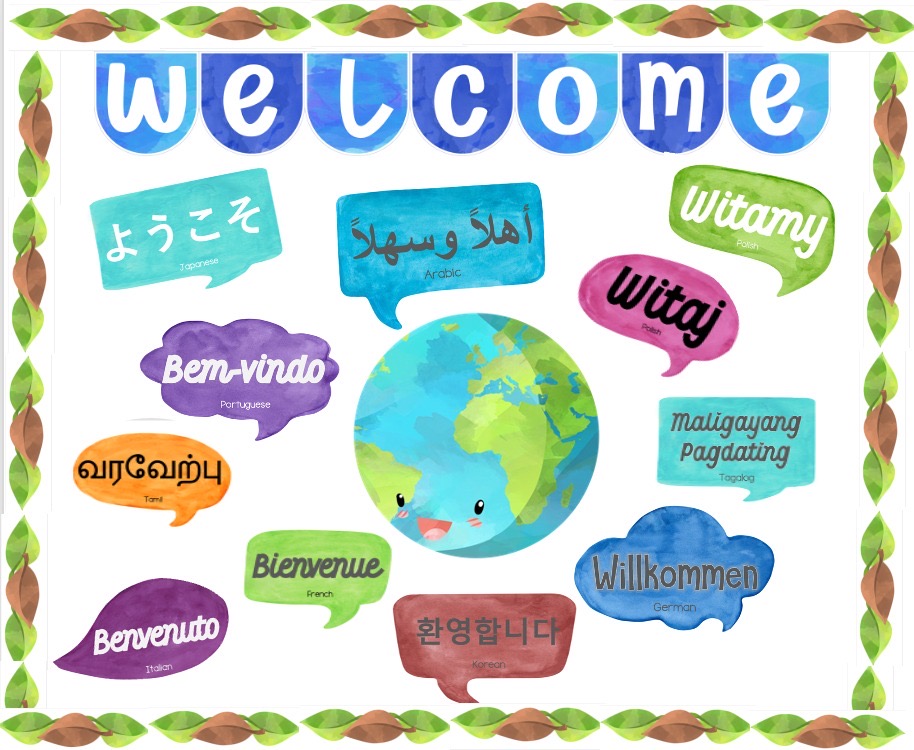
Representation matters. Displaying flags, greetings in students’ home languages, or a simple “Welcome” banner shows students and families that their identity is valued.
Try this:
- A multilingual greeting poster or display
Students’ family photos, flags, and maps on a classroom wall
For many newcomer students — especially those who have experienced displacement, trauma, or a sudden and unwanted move — walking into a classroom where their language and culture are visible is genuinely emotional. It says: someone here thought about me before I even arrived.
Simple ways to honor home languages and cultures:
- Learn to say hello in each student’s home language and use it. Students notice, and so do families.
- Greetings from home countries on a bulletin board or door — students can point to theirs and share with classmates
- A world map where students can mark where they’re from. This often becomes a conversation starter among students without any teacher prompting.
- Avoid the assumption that English-only is the goal. Students who can maintain and develop their home language alongside English are cognitively advantaged. Honoring home language isn’t a consolation prize, it’s best practice.
🧩 5. Establish Visual Routines From Day One
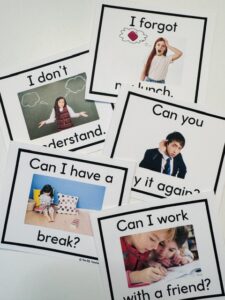
Classroom routines become more accessible when you add visuals. Practice lining up, unpacking backpacks, or transitioning between activities with visual cue cards or gesture-supported routines. You can even take photos of students doing different classroom actions to use as visuals.
Helpful tools:
Visual routine cards (line up, sit down, listen, share)
Cue cards you can wear on a lanyard
Routines are the invisible structure that makes everything else possible. For newcomers, who are processing an enormous amount of new input every minute of every school day, routines are a lifeline. When they know what comes next, they can focus their mental energy on language — not on figuring out what’s happening around them.
The most important routines to establish visually in the first week:
- Morning arrival routine: What do students do when they walk in? Hang up backpack, take out folder, begin morning work? Make this a visible numbered sequence posted near the door.
- Asking for help: Teach a non-verbal signal (hand on head, specific card on desk) so newcomers can indicate they need support without interrupting or feeling embarrassed about not knowing the words.
- Transitions between activities: A consistent signal (chime, clap pattern, countdown) paired with a visual cue card gives newcomers a heads-up before a transition happens.
- Cleanup and dismissal: Post picture steps for packing up so newcomers can follow along independently from week one.
Pro tip: Take photos of your actual students doing each routine in the first few days and use those as your visual cue cards. Students love seeing themselves, and photos of real kids in your actual classroom are far more meaningful than generic clip art.
It doesn’t take a complete overhaul to set-up a newcomer-friendly classroom. Small adjustments, especially visual supports, can make a huge difference in helping students feel confident, independent, and included from the first day.
Frequently Asked Questions
I’m a general education teacher, not an ESL specialist -where do I start? Start with visuals and seating. Those two things make the biggest immediate difference and require no special training. Label your supply areas with pictures, seat your newcomer near a kind verbal peer, and establish one simple non-verbal signal for asking for help. That’s enough for day one. Build from there.
What if a newcomer arrives mid-year after I’ve already established routines? This is very common! The good news is that visual routines are actually easier to catch up on mid-year than academic content, your classroom visuals are already there waiting. Assign a patient buddy for the first week to walk the newcomer through routines, and use the “All About Me” activities as a welcome unit regardless of the time of year.
Do I need to speak the student’s home language? No, but a few words go a long way. Learning to say “hello,” “good job,” and “don’t worry” in a student’s language communicates enormous warmth and respect even when full communication isn’t possible. Google Translate is a reasonable bridge for simple back-and-forth communication in the early days.
What if I have multiple newcomers from different language backgrounds? Visual supports and routines work across all language backgrounds simultaneously – that’s exactly their power. Focus on systems that don’t depend on any one language, and pair each newcomer with a thoughtful buddy regardless of shared language.
If you try any of these ideas, I’d love to see it! Come share on Instagram or TikTok and tag me please. Real classroom photos are always my favorite thing to see.
More posts to help you support your newcomers:
More Resources for a Newcomer-Friendly Classroom: